
Radon is a colourless, odourless and radioactive gas that naturally occurs from the breakdown of uranium in soil, rock, and water. Some intriguing theories suggest that radon’s ability to cause DNA mutations may have played a role in evolution. However, although invisible, radon can pose significant health risks when it accumulates in homes and buildings. In the UK, it’s estimated that radon exposure is responsible for approximately 1,100 lung cancer deaths per year.
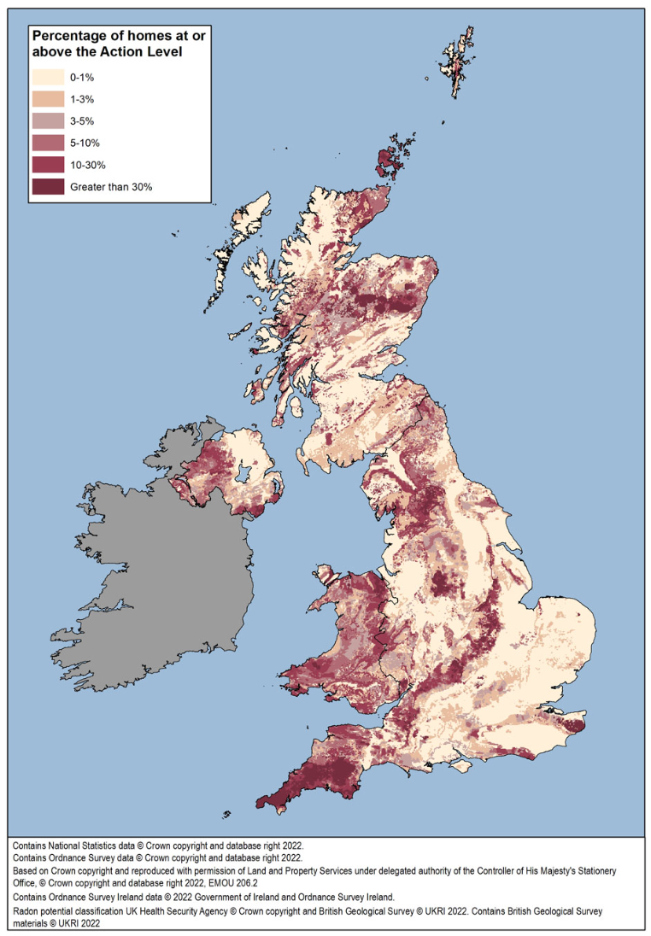
How radon enters homes
Radon seeps into homes from the air beneath the building, particularly from the underfloor space. In homes with poor ventilation or older construction methods, radon can accumulate to harmful levels. This is because older homes often lack radon barriers or plastic membranes that are now standard in modern construction. Without these barriers, radon can easily infiltrate the living areas.
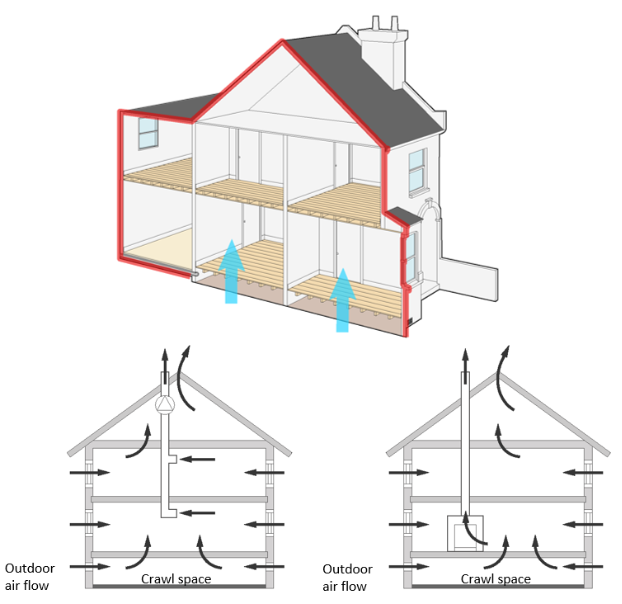
The Impact of Energy-Efficient Refurbishments: The Bell Jar Effect
To improve energy efficiency, many homeowners add insulation and increase airtightness in their homes. While this leads to reduced energy costs and EPC rating, it can inadvertently create a “bell jar effect”—trapping harmful gases like radon inside the home. Studies have shown that homes with energy-efficient refurbishments tend to have twice the amount of radon as non-refurbished homes.
This effect is especially pronounced in houses with unsealed suspended timber floors. These homes, common in older buildings, often have gaps between floorboards and underfloor voids where radon can seep up from the ground below. When the home is made more airtight, the radon becomes trapped, unable to escape through natural ventilation. Added to this Without an effective radon barrier, the gas accumulates, increasing exposure to harmful levels. In this scenario, improving airtightness without sealing or properly ventilating underfloor spaces can turn energy-efficient homes into radon hotspots.
It is also important to note that mechanical extract ventilation systems can sometimes exacerbate radon issues. If there is no airtight barrier between the living space and the underfloor void, these systems can inadvertently pull radon and other impurities from the underfloor space into the home, increasing exposure.
The Importance of Underfloor Ventilation in Reducing Radon
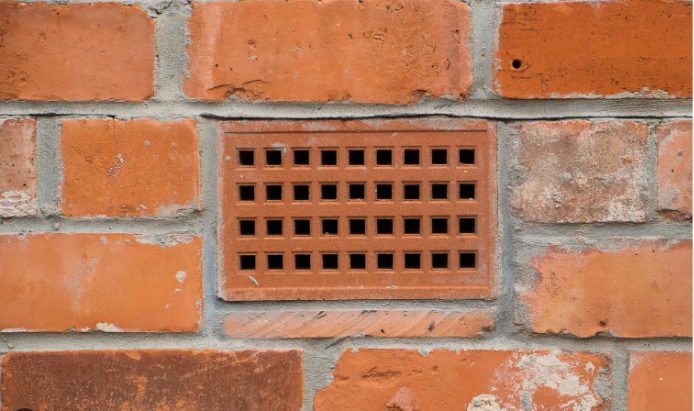
To mitigate the risks of radon, proper uninterrupted ventilation of crawl spaces and underfloor areas is crucial. Ventilation ensures that radon gas is continually dispersed, preventing it from building up under the floor. Without proper airflow, even small amounts of radon seeping into the underfloor void can lead to elevated concentrations inside the home.
Sealing Suspended Timber Floors as an Effective Mitigation Method
Sealing the floor is a recommended method of radon mitigation. The Royal Institution of Chartered Surveyors (RICS) advises that sealing suspended timber floors can be an effective way to prevent radon from entering the living areas. However, RICS cautions that membranes applied on top of the floor surface—rather than underneath—are prone to being punctured or worn down by foot traffic and general wear and tear, reducing their effectiveness over time.
Closed Cell Spray Foam as an Effective Radon Barrier
An effective solution to radon infiltration is the application of Closed Cell Spray Foam insulation, particularly on floors. This type of insulation acts as a strong radon barrier, significantly reducing radon concentration in the home. Research comparing radon reduction methods found that spray polyurethane foam reduced radon concentrations by up to 98%, compared to 68% reduction using 6-mil polyethylene sheeting.
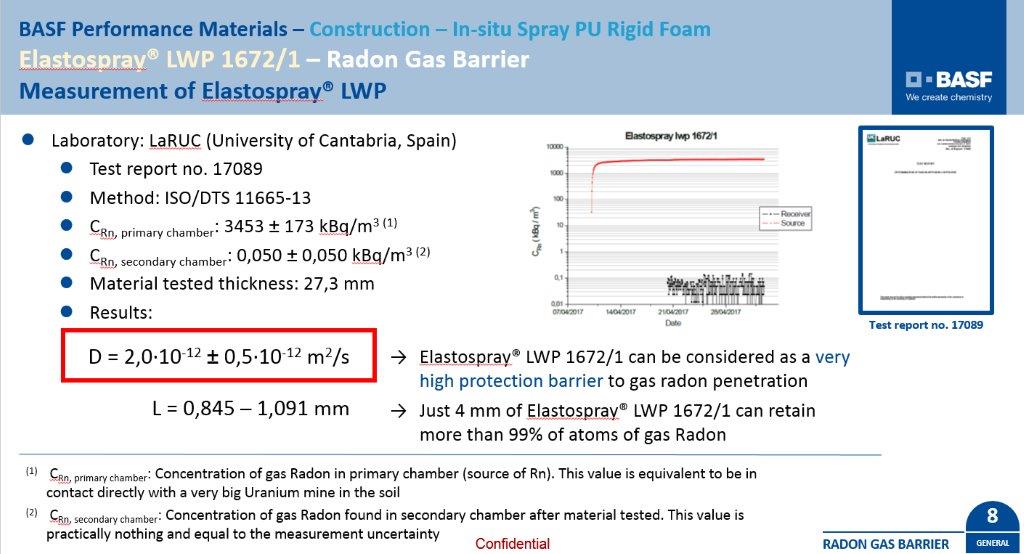
Installing Closed Cell Spray Foam from beneath the floor (in the underfloor void) is particularly effective because it reduces the risk of the barrier being punctured, which can occur if membranes are applied on top of the floor. Combined with a well-ventilated underfloor space, Closed Cell Spray Foam can be one of the most reliable radon prevention measures available for UK homes.
For more information, please visit our Q-Bot main website.