
A Technical Guide
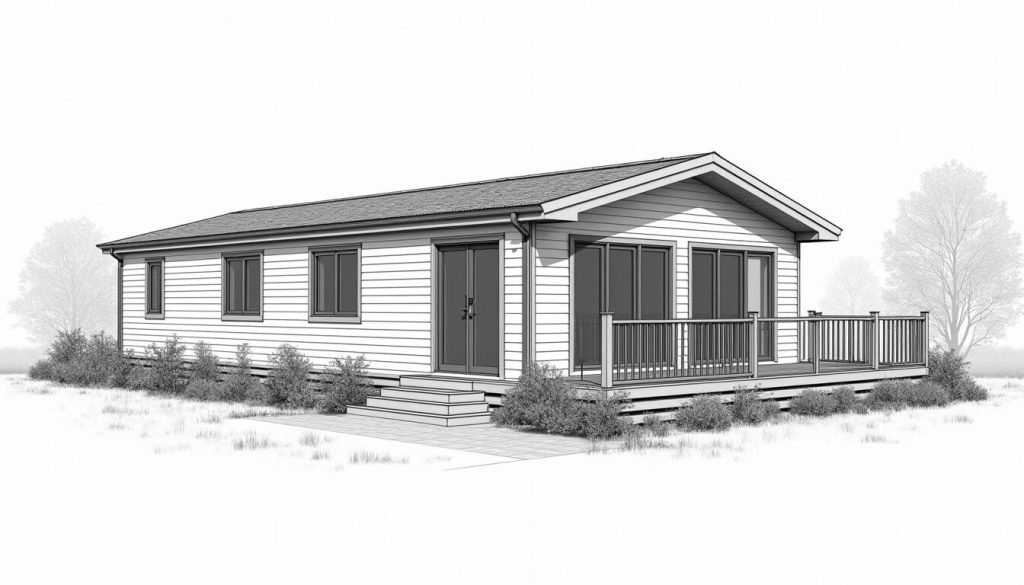
Park homes are among the most challenging residential building types to treat for energy efficiency. Lightweight construction, exposed perimeters, and cold, ventilated chassis voids mean that the floor is often the single largest source of heat loss, draughts, and occupant discomfort.
Q-Bot provides a robotically applied, airtight underfloor insulation (UFI) system specifically designed to address these constraints. The system delivers rapid thermal improvement, reduced moisture risk, and consistent real-world performance with minimal disruption to occupants.
This article explains how the system works, how it compares to other common floor insulation methods, and how it aligns with Building Regulations and park home standards. For programme delivery, pricing, and commercial enquiries, see the main Q-Bot website.
Why floors matter so much in park homes
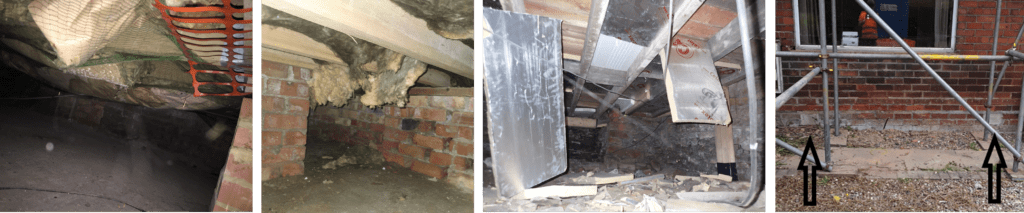
Most park homes sit above open or ventilated steel chassis voids. Unlike masonry dwellings, these voids are:
- Continuously exposed to cold external air
- Poorly sealed at perimeter junctions and service penetrations
- Highly susceptible to wind-driven heat loss
As a result:
- Floor surface temperatures are low
- Heating demand is disproportionately high
- Draughts persist even after wall or roof upgrades
Addressing the floor delivers one of the largest single step-changes in comfort and energy performance available in a park home.
The Q-Bot System: how it works
The Q-Bot solution applies closed-cell insulation foam directly to the underside of the floor deck from within the subfloor void using robot or manual application. All survey and installation information is collected on our SWARM digital platform.
Key technical characteristics
- Airtight layer bonded directly to the floor structure
- Continuous coverage across joists, boards, and junctions
- No internal disruption occupants remain in place
- Installation typically completed in a single day
Applied from below, the system simultaneously:
- Improves thermal resistance
- Permanently reduces uncontrolled air leakage
- Eliminates draughts
- Protects the floor structure from moisture risk
This combination makes robotic UFI one of the fastest and most practical decarbonisation measures available for park homes.
Thermal performance
Q-Bot underfloor insulation typically delivers:
- Floor U-values of 0.13–0.18 W/m²K, depending on thickness and geometry
- Airtightness improvements that stabilise indoor temperatures
- Reduced heating demand and faster warm-up times
These outcomes exceed the BS 3632 floor performance requirement, commonly used as guidance for park home retrofit.
Comparison with other floor insulation methods
When specifying insulation for park homes, it is important to compare not just headline U-values, but installation practicality, moisture risk, cost drivers, material wastage, and long-term performance.
| Factor | Rigid board insulation (from below) | Mineral wool / fibre systems | Q-Bot solution |
|---|---|---|---|
| Typical install time | 2–4 days | 2–3 days | ~1 day |
| Disruption to occupants | External only, prolonged | External only, prolonged | None inside the home |
| Labour intensity | High | Moderate–high | Low |
| Material cost (relative) | Low–moderate | Low | Higher |
| Overall cost drivers | Labour, access systems, waste | Labour, fixings, maintenance | Predictable install time, minimal labour |
| Airtightness improvement | Low–moderate | Low | High (continuous seal) |
| Achievable U-values (floor) | Good on paper | Moderate | 0.13–0.18 W/m²K typically |
| Real-world performance | Variable | Often degrades | Consistent |
| Moisture risk in park homes | Medium–high if detailing poor | High | Low when correctly specified |
| Sensitivity to workmanship | Very high | High | Low |
| Long-term durability | Variable | Poor–moderate | High |
| Material wastage | High (cutting, offcuts) | Moderate | Minimal |
| Suitability for irregular voids | Poor | Moderate | Excellent |
In park home conditions, labour time, airtightness continuity, and moisture robustness are often more critical to long-term outcomes than material cost alone.
Fire regulations
Fire performance is frequently raised by park home operators, insurers, and residents. Q-Bot takes a transparent, regulation-led approach.
Base system (standard installation)
- All closed-cell spray foams used in UK construction achieve Euroclass E
- The insulation is installed outside the occupied space, within the subfloor void
- There are no ignition sources within the void
- The insulation is protected by the floor structure above
KIWA certification confirms that the insulation does not add significant fire hazard until the floor itself is destroyed.
Under Approved Document B:
- Suspended floors are not treated the same way as walls or cladding
- Reaction-to-fire requirements focus on habitable building elements
- Suspended floors are exempt from structural fire resistance rules and do not require a reaction-to-fire classification
The standard system therefore meets Building Regulations for underfloor insulation in park homes.
For sites or clients with stricter internal policies or insurance requirements, Q-Bot offers an optional Euroclass B upgrade specifically for Park Homes.
After the insulation has cured, a fire-retardant coating (such as DC315 or equivalent) can be applied. This upgrade:
- Improves classification from Euroclass E to Euroclass B
- Uses water-based, low-VOC coatings
- Is suitable for park home chassis and subfloor environments
Moisture safety and durability
Moisture management is critical in park homes, and Part C of the Building Regulations is the primary driver of system specification.
Q-Bot installations require:
- Timber moisture content below 20% prior to spraying
- No standing water, pooling, or unmanaged condensation risk
- Maintenance of the existing subfloor ventilation strategy
The closed-cell insulation system:
- Resists moisture ingress
- Raises floor surface temperatures, reducing condensation risk
- Protects the floor structure when correctly specified
Optional upgrades can include airbrick improvements or ventilation optimisation where required.
Digital quality assurance
Every installation is supported by a full digital QA package, including:
- Pre-installation condition checks
- Robot-applied coverage records
- Video evidence from within the void
- Declaration of Conformity
This level of documentation supports landlords, insurers, and asset managers managing dispersed park home portfolios.
Monitoring and performance evidence (optional)
For selected projects, Q-Bot can support:
- Pre- and post-installation temperature monitoring
- Energy and comfort performance tracking
- SmartHTC-compatible monitoring where heating demand is measurable
These case studies are used selectively for evidence-building. Monitoring is not currently suitable for SAP Q Methodology 5B and is therefore applied to a limited number of homes.
Installation requirements
A park home must meet the following criteria:
- Minimum 200mm crawl space
- 200-400mm for the robot
- 400mm+ may be hand-sprayed
- Reasonable access to the subfloor void
- No wet rot, water pooling, or excessive moisture
- Metal chassis must show no corrosion or structural damage
Each project is assessed prior to confirmation.
Regulatory alignment summary (England & Wales)
Part C – Moisture
- Adequate subfloor ventilation maintained
- Timber moisture <20% before installation
Part L – Conservation of Fuel & Power
- Floor upgrades target U ≤ 0.25 W/m²K where feasible
- Airtightness continuity maintained
Part B – Fire Safety
- Suspended floors exempt from reaction-to-fire classification
- Insulation outside occupied space
- Optional Euroclass B upgrade available
Parts A & F – Structure & Ventilation
- No compromise to structural integrity or ventilation strategy
BS 3632 – Park Homes Standard (guidance)
Although primarily a standard for new park homes, BS 3632 is widely used as performance guidance for retrofit:
- Floor: ≤ 0.26 W/m²K
- Walls: ≤ 0.30 W/m²K
- Roof: ≤ 0.20 W/m²K
Q-Bot underfloor insulation typically outperforms the floor requirement, supporting whole-home upgrade strategies.
Summary
Most park homes lose a huge amount of heat through the floor because of the cold, ventilated chassis void. Q-Bot’s robotic insulation seals the floor from underneath with no disruption inside the home delivering a step-change in comfort and energy bills.
The system is fully certified and safe in the floor void. Where sites or insurers require higher fire performance, the installation can be upgraded to Euroclass B using a spray-applied fire-retardant coating.
For commercial details, funding routes and delivery programmes, please visit our Q-Bot main website.